Why do most LinkedIn outreach messages get ignored?
Because they ask for the largest possible commitment at the moment of least trust. A message that opens with a compliment and closes with a calendar link is asking a stranger for thirty minutes before establishing that you are worth thirty seconds.
The second failure is that the message could have been sent to anybody. Personalization tokens do not solve this. "I see you work at {company} in {industry}" is visibly automated, and recipients recognize the pattern instantly because they receive several every week.
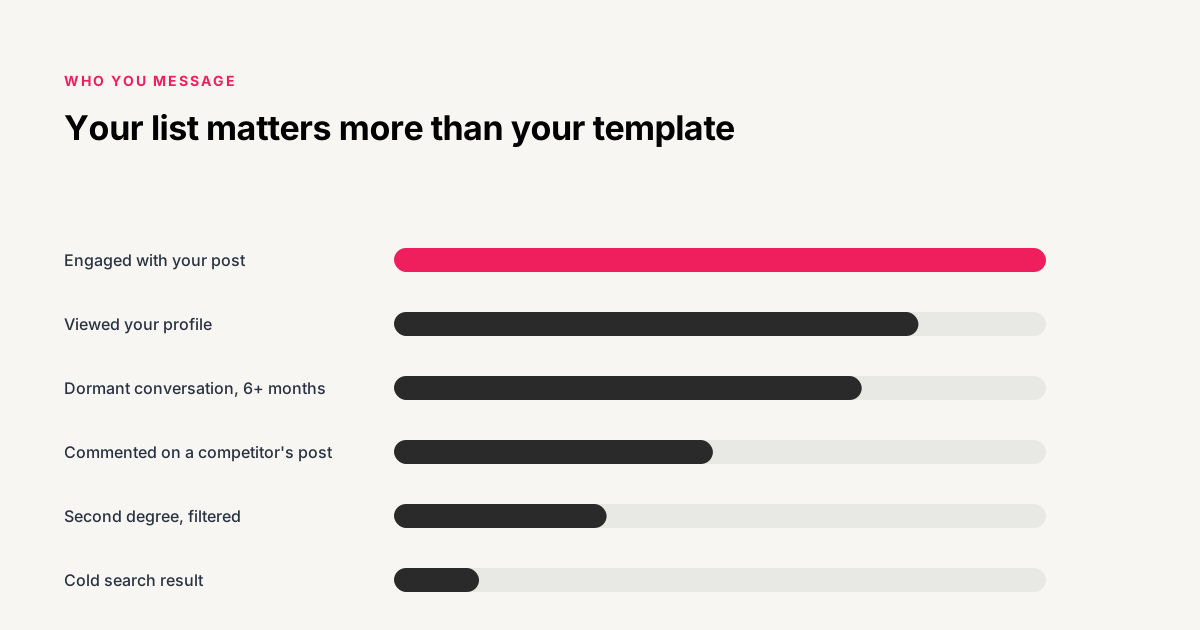
Which leads to the claim worth making early: your list matters more than your template. A mediocre message to somebody who engaged with your post last week will outperform an excellent message to a stranger, consistently. Most people optimize the copy because the copy is the part they control most easily.
What should a connection request say?
Either nothing at all, or one sentence explaining the specific reason. Both work. What fails is the middle ground, meaning a generic note that adds words without adding a reason.
Never pitch in a connection request. It is the fastest route to being ignored permanently, and it burns the contact for any future approach, because the person now associates your name with a message they declined.
What should the first message after connecting say?
Something only you could have written to them, ending in a question they can answer without effort. The first message has exactly one job, which is starting a conversation, and any attempt to accomplish more reduces the odds of accomplishing that.
Template six is the strongest of these and the least used. Offering a specific observation about something they own proves you looked, provides value before asking for any, and creates a natural opening for a longer conversation without requesting one.
How should you follow up when there is no reply?
Add something new rather than repeating the request. The reason follow-ups feel intrusive is that most of them restate the original message in a slightly more apologetic register, which gives the recipient nothing to respond to except the guilt of not having replied.
Template ten produces more replies than any other message in the sequence, which surprises people. Removing the expectation of a response is what makes responding feel voluntary, and a meaningful proportion of the people who receive it reply specifically to say the timing was wrong rather than the offer.
Two follow-ups is the limit. Anything beyond that converts a neutral non-response into an active negative impression, and the contact is more valuable dormant than annoyed.
Why silence is usually about timing
It is worth understanding what a non-reply actually indicates, because the natural interpretation is almost always wrong. People assume silence means the message failed. Most of the time it means the message arrived during a week where this problem was not among the person's top ten concerns.
That reframing changes the correct response. If silence meant rejection, escalating would be reasonable, since you would have nothing left to lose. If silence usually means timing, escalation destroys a contact who would have been receptive in four months, which is a considerably worse outcome than a non-reply.
So the pattern is two useful touches, a graceful close, and then genuine patience. Move them into a list you revisit twice a year rather than a sequence that keeps pressing. The re-engagement templates below are what that revisiting looks like, and they consistently outperform the original outreach because circumstances have had time to change.
How do you restart a conversation that went quiet?
Reference the specific thing you discussed and give an honest reason for the timing. Dormant conversations are the most underworked list most consultants have, because circumstances change and nobody goes back to check.
Both work because they demonstrate that you remembered a specific detail, which is rare enough to be notable, and because they give the recipient an easy way to decline without awkwardness. Offering a graceful exit consistently increases the number of people who do not take it.
Who should you actually be messaging?
Work outward from the people who have already signaled something, because the difference in reply rate between a warm list and a cold one is larger than any improvement copy can produce.
| List | How warm | Typical size |
|---|---|---|
| People who engaged with your posts | Warmest | Tens per month |
| People who viewed your profile | Warm | Tens per week |
| Dormant conversations over 6 months old | Warm | Whatever you have accumulated |
| Commenters on competitors' posts | Lukewarm | Large and unworked |
| Second degree at target companies | Cool | Effectively unlimited |
| Cold search results | Coldest | Unlimited, lowest return |
Exhaust the top three before touching the bottom two. Most consultants invert this, because cold search feels like real prospecting while messaging somebody who liked a post feels almost too easy.
How many messages should you send per week?
Enough to produce the conversations you need, which is usually far fewer than people assume. LinkedIn limits most accounts to roughly one hundred connection requests per week, and that ceiling tightens automatically if your acceptance rate falls.
- Set a target in conversations, not messages. Five genuine conversations a week is a substantial pipeline for most consulting offers. Work backward from that.
- Work the warm lists first, every week. Anyone who engaged or viewed in the last seven days. This list refreshes itself if you are publishing.
- Fill the remainder with second degree contacts. Filtered by role, company size and industry. Twenty to thirty a week is sustainable alongside delivery.
- Track replies, not sends. Volume sent is an activity metric. Replies received is the only number that predicts anything.
- Stop and rewrite below five percent. A reply rate under five percent on a warm list means the message is wrong. Sending more of it will not help.
Doing this consistently every week is where most people fail, since outreach is the first thing dropped during a busy delivery month and the hardest to restart afterwards. That is the argument for having it operated rather than remembered, which is what our outreach and DM systems service does.
How much personalization is actually necessary?
One genuinely specific detail per message, and it has to be something that required reading rather than something a field merge could supply. The distinction is not about effort in the abstract, it is about whether the recipient can tell.
Company name, job title and industry are all visible in the profile header, which means referencing them proves nothing. A recipient reading "I see you are a fractional CFO in SaaS" understands immediately that no human considered their situation. A reference to something they wrote, or a detail from three roles down their profile, cannot be produced without attention.
| Detail referenced | Proves you looked? | Effect |
|---|---|---|
| Company name and job title | No | Reads as automated |
| Industry and headcount | No | Available from a filter |
| A post they wrote | Yes | Strong |
| A specific claim inside that post | Yes | Strongest |
| Something on their own website | Yes | Strong, rarely done |
| A mutual connection and why | Yes | Strong if genuine |
This has a direct consequence for volume. Real personalization takes two or three minutes per person, which caps sustainable output at roughly twenty to thirty messages a week alongside client work. That constraint is the reason working warm lists first matters so much, because it concentrates a limited budget of attention on the people most likely to respond.
What has to be true before outreach works at all?
Your profile has to survive the click. Every message you send produces the same behavior in anyone mildly interested, which is that they open your profile before deciding whether to reply. If that profile describes your career history rather than their problem, the message was wasted regardless of how well it was written.
This is the most common reason outreach underperforms, and it is invisible from inside the process. The messages look fine. The reply rate is poor. The actual failure happened after the message succeeded, on a page nobody thought to check.
Fix the headline and the featured section before increasing send volume. Both take under half an hour and both improve the return on every message you have already sent as well as every one you send afterwards. The specifics are in our guide to LinkedIn profile optimization, and if you would rather have the profile and the content rebuilt together, that is our LinkedIn presence and content service.
What do you say once somebody replies?
Answer what they said, add one thing, and let the conversation continue for at least two exchanges before mentioning a call. The most common way to lose a reply is to treat it as permission to pitch.
When the moment does arrive, make the call specific and bounded. Name the topic, name the duration, provide a link. "Happy to map out how I would approach the consolidation, takes about twenty minutes, here is my calendar" gives somebody three pieces of information and one action.
Not everybody who replies is ready, and the ones who are not should go into a nurture sequence rather than being abandoned, which is covered in our guide to the B2B email nurture sequence. The wider structure this all sits inside is in our guide to getting clients on LinkedIn, and the Ed Perez Fitness case study shows outreach running as one component of a complete system rather than on its own.
Frequently asked questions
Should you use LinkedIn automation tools?
Cautiously, and never for the first message. Automated sending violates LinkedIn's user agreement and risks restriction, and automated personalization is recognizable to recipients. Tools that help you build and track lists are useful. Tools that send on your behalf are a liability.
What is a good LinkedIn reply rate?
On a warm list of people who engaged with your content, 15 to 30 percent is achievable. On cold second degree outreach, 5 to 10 percent is more typical. If a warm list is returning under five percent, the message is the problem rather than the volume.
Should you send InMail or connect first?
Connect first in almost every case. InMail reaches people outside your network but reads as paid access, and the reply rates are generally lower than a well-targeted connection request followed by a genuine message. Save InMail for people who will not accept requests.
How long should a LinkedIn message be?
Under 60 words for a first message. It should fit in the preview without expansion, because a message that requires a click to read is a message competing for a second decision. Later messages in a conversation can be longer once interest exists.
Should you include a link in the first message?
No. A link in a first message converts it from a conversation into a request, and most people will not click something from somebody they have not spoken to. Send links once there is an exchange, ideally when they are the answer to something the person asked.
What if somebody replies negatively?
Thank them and stop. A short, gracious close costs nothing and occasionally produces a referral later, since the person now has a mildly positive impression rather than a negative one. Arguing with a rejection has never once improved an outcome.
Published . Last updated . 2,570 words.